Despite robust investment and services momentum, weak private consumption and exports remain a drag on overall growth.
New Delhi, Aug 26, 2025: India’s GDP growth for the April–June quarter (Q1 FY26) is expected to moderate to around 6.6–6.7% year-on-year, down from 7.4% in the previous quarterreuters.com. Economists attribute the slight cooling to softer industrial activity and tepid private demand even as government capital spending surgedreuters.comreuters.com. The official data due August 29 will offer the first glimpse of India’s post-election economic momentum in FY26, setting the tone for monetary policy and markets going forward.
Context
Alt text: India Q1 FY26 GDP preview and outlook to 2047
If the consensus of ~6.7% growth is realized, it would be broadly on par with the 6.7% expansion recorded in Q1 last yearpib.gov.in, suggesting that India’s recovery has entered a steadier but less spectacular phase. Over the last four quarters, GDP growth ranged from 5.6% to 7.4%, with the most recent January–March quarter topping 7% thanks to a favorable base and resilient servicespib.gov.in. In contrast, April–June 2025 likely saw growth revert to the mid-6% range as base effects normalized and some drivers lost steam. Notably, industrial output grew just 1–2% year-on-year in Q1 FY26 – a sharp slowdown from 5.7% a year agoreuters.comreuters.com. An early monsoon curtailed mining and power generation in May, dragging the Index of Industrial Production to a nine-month lowreuters.comreuters.com. This industrial dip, alongside soft exports, explains much of the deceleration from last quarter’s 7%+ clip. However, India’s 6.5% GDP growth in FY2024-25 was still the fastest among major economiesreuters.comreuters.com, and current forecasts for FY25-26 (around 6.3–6.5%) suggest a continuation of that top-ranked, if unspectacular, expansion. Policymakers emphasize that sustaining 8%+ growth will be needed to achieve “Developed India 2047” aspirations – a target that looks ambitious amid global uncertaintiesreuters.comreuters.com.
Analysis
Dissecting the demand-side drivers, private consumption appears to be the weak link. Stagnant urban incomes and job cuts have tempered spending on big-ticket goodsreuters.com, as seen in declining output of consumer durables this quarterreuters.com. Goods and Services Tax collections, while up ~6% YoY in June (₹1.85 lakh crore)business-standard.com, grew at the slowest pace since 2021 – a sign of cautious consumer sentimentbusiness-standard.com. In contrast, government investment emerged as a key growth propellant. The central government front-loaded over ₹2.75 lakh crore in capital expenditure during Q1 (about 25% of the full-year target) – well above last year’s pacemoneycontrol.com. This fiscal push drove a 52% YoY surge in public capital spendingreuters.com, evident in double-digit growth of infrastructure sectors like construction and capital goodspib.gov.inreuters.com. However, private capex remains elusive: surveys indicate companies’ planned investments for FY26 are running below last year’s levels, amid rising global headwindsmoneycontrol.com. Net exports likely continued to weigh on GDP. External demand has been mixed at best – merchandise exports have faced pressures from tariffs and tepid global trade, even as services exports confront U.S. policy uncertaintiesreuters.com. A 50% U.S. tariff on certain Indian goods took effect in July, which the Finance Ministry warns could shave 0.4% off 2025-26 growthreuters.com. Import growth has also moderated alongside domestic demand. As a result, trade is expected to remain a net drag, though a recent dip in oil prices and progress on free trade deals (e.g. with the UK) might cushion the impactpib.gov.inreuters.com.
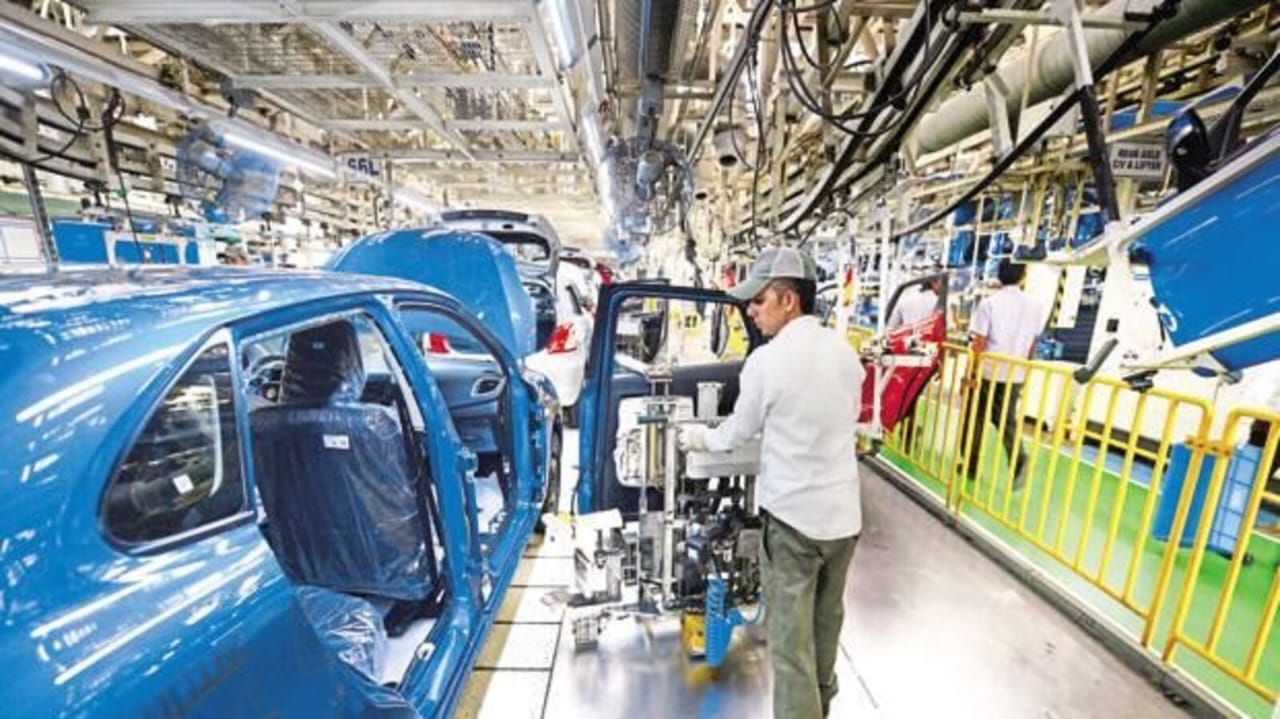
On the supply side, services continue to be the economy’s workhorse. The services PMI hit a 10-month high of 60.4 in June, signaling robust expansionnewindianexpress.com. Sectors like finance, real estate, and hospitality are buoyed by pent-up demand and easier credit. Agriculture and allied rural sectors held up well thanks to a normal monsoon onset and easing food prices, which kept rural demand resilientreuters.com. The industrial sector presents a dichotomy: manufacturing PMI climbed to a 14-month peak of 58.4 in June on strong order flowsbusiness-standard.com, yet actual factory output barely grew as firms ran down inventories and faced patchy power supply. Analysts interpret this as the formal manufacturing sector (captured by PMI surveys) outperforming smaller units that weigh on IIPbusiness-standard.combusiness-standard.com. Within industry, construction remained a bright spot, expanding at double digits (helped by public projects), while mining and utilities saw year-on-year declines due to weather disruptionsreuters.comreuters.com. As for the often-confused metrics, gross value added (GVA) – a measure of aggregate output – is forecast to rise slightly slower than GDP (~6.4% vs 6.7%)reuters.com. This suggests the GDP figure will get a small boost from tax revenues (GDP = GVA + taxes – subsidies), unlike the previous quarter when tax changes had widened the gapreuters.com. Overall, the Q1 data is expected to show an economy growing slightly below potential, with strength in services and public investment just offsetting the softness in consumption, manufacturing, and trade.
Expert Commentary
Economists are split on whether India’s current growth mix is a cause for concern or cautious optimism. Rajani Sinha, chief economist at CareEdge Ratings, notes that signs of a slowdown have emerged in industry. “Weaker performance in mining, utilities, and manufacturing – as signaled by high-frequency indicators – suggest global policy uncertainties and an early monsoon weighed on industrial output in Q1,” Sinha saidmoneycontrol.com. She adds that geopolitical tensions and trade policy hiccups are keeping manufacturing exporters on edge. Madhavankutty G, chief economist at Canara Bank, is likewise circumspect: “Industrial growth has not been very good, and manufacturing is showing sluggish signs. Tariffs and global uncertainties have slowed private capex”reuters.com, he observed, warning that structural challenges (like job creation) are holding back faster growth. On the other hand, some experts highlight the economy’s enduring pillars. Radhika Rao, senior economist at DBS Bank, expects the June quarter to hold up at ~6.6% growth, thanks to “a strong pick-up in government spending, steady service sector output, resilient rural demand anticipating a good monsoon, and better farm production”moneycontrol.com. In her view, those factors “will offset much of the drag from manufacturing.” Indeed, services activity is running at its highest in three quartersmoneycontrol.com. Rao also points out that inflation has eased into the RBI’s comfort zone, which allowed 75 bps of repo rate cuts in H1 2025 and improved financial conditions for consumersreuters.com. Looking ahead, global analysts remain cautiously optimistic about India. The International Monetary Fund, for instance, just raised its 2025 growth projection for India to 6.4%, citing a “more benign external environment” than previously assumedreuters.com. This external validation suggests India will remain the world’s fastest-growing major economy, though as Debopam Chaudhuri of Piramal Group cautions, “At 6.4–6.5% growth, we won’t be able to create meaningful employment on a sustained basis…private capex has to pick up to ensure high-quality jobs for our large population”reuters.com. It’s a reminder that beneath the headline numbers, the quality and inclusiveness of growth will be under scrutiny.
Retail Investor Impact
The macro momentum – or lack thereof – in Q1 FY26 could subtly influence Indian investors’ portfolios. For one, the GDP print will feed into the RBI’s interest rate outlook. With growth running slightly below trend and inflation subdued, any further downside surprise might rekindle bets on an additional rate cut later in the year. Easing rates generally bode well for equity valuations, but they could also compress bank margins. Banking stocks may face a trade-off: on one hand, continued economic growth supports credit demand and keeps bad loans low; on the other, the recent slowdown in loan growth (down to ~9–10% YoY from ~15% last yearcareratings.com) and potential rate cuts might pinch interest income. Robust GDP growth in the services and construction sectors is a positive for cyclical stocks – e.g. banks, infrastructure, consumer discretionary – which tend to outperform when the economy is strong. Indeed, sectors linked to domestic demand (autos, cement, travel) could see a sentiment uptick if the data confirms resilience. Conversely, ongoing external headwinds (weak exports, global uncertainty) could favor defensive plays like IT and pharma to some extent, as investors hedge against global risks. Broadly, a growth rate around 6–7% keeps India Inc.’s earnings outlook reasonably healthy, underpinning the long-term equity story. Retail investors should thus maintain their SIP discipline through market cycles. A single quarter’s GDP result is unlikely to derail the structural trajectory – India’s corporate earnings and stock indices have historically trended upward in line with economic growthgoldmansachs.com. If anything, periods of macro uncertainty often present buying opportunities for disciplined investors. In practical terms, a steady growth print could reinforce confidence in mutual fund SIPs, as consistent GDP expansion feeds into higher corporate revenues, job creation, and incomes over time. The key is to stay invested through short-term volatility. As India eyes lofty 2047 targets, the power of compounding – in both GDP and portfolio values – will reward those with patience.
What’s Next
All eyes will be on the National Statistical Office release scheduled for 5:30 PM IST on August 29, 2025, when the official Q1 FY26 GDP and GVA figures are announced. This will kick off the FY26 data cycle, with two subsequent revisions to follow (a first revision in November and final figures next January) as more comprehensive data from informal sectors and SMEs are incorporated. Markets and policymakers will parse the expenditure components – especially private consumption and investment – for any inflection points. The RBI’s reaction in its next policy review (due in early October) will partly hinge on these growth signals vis-à-vis the 6.5% full-year projectionpib.gov.in. Beyond the headline number, investors should track high-frequency trends in the coming 90 days: the progression of the monsoon and sowing will determine rural incomes heading into harvest season; festival spending in October–November will test the strength of urban consumption; and crucially, any resolution (or escalation) of trade disputes – for example, if the U.S. tariff war abates or if a long-pending UK trade deal is sealed – could alter the export outlook. Credit growth and capacity utilization data will reveal if private capex is finally picking up in response to the easier financial conditions. In the bigger picture, India’s economy enters this quarter at a crossroads: current growth around 6.5% is solid but below the pace needed for the 8% vision. The coming months will show whether the government’s capex push can crowd-in private investment and whether global headwinds intensify or ease. As FY26 unfolds, the balance between domestic resilience and external challenges will determine if India can hold its growth momentum – or if policy support (through rate cuts or fiscal adjustments) needs to lean in further. For now, the Q1 data will offer a crucial preview of India’s post-pandemic, post-election trajectory – one that investors and policymakers alike will be watching closely.