
The cryptocurrency market has endured a brutal September 2025 selloff, with over $160 billion wiped from global market capitalization in a matter of days, reviving the notorious “Red September” curse that has haunted digital assets for years. This massive liquidation event has sent shockwaves through the crypto ecosystem, dragging down Bitcoin, Ethereum, and major altcoins as investors flee to safer assets amid mounting macroeconomic uncertainty and regulatory concerns.
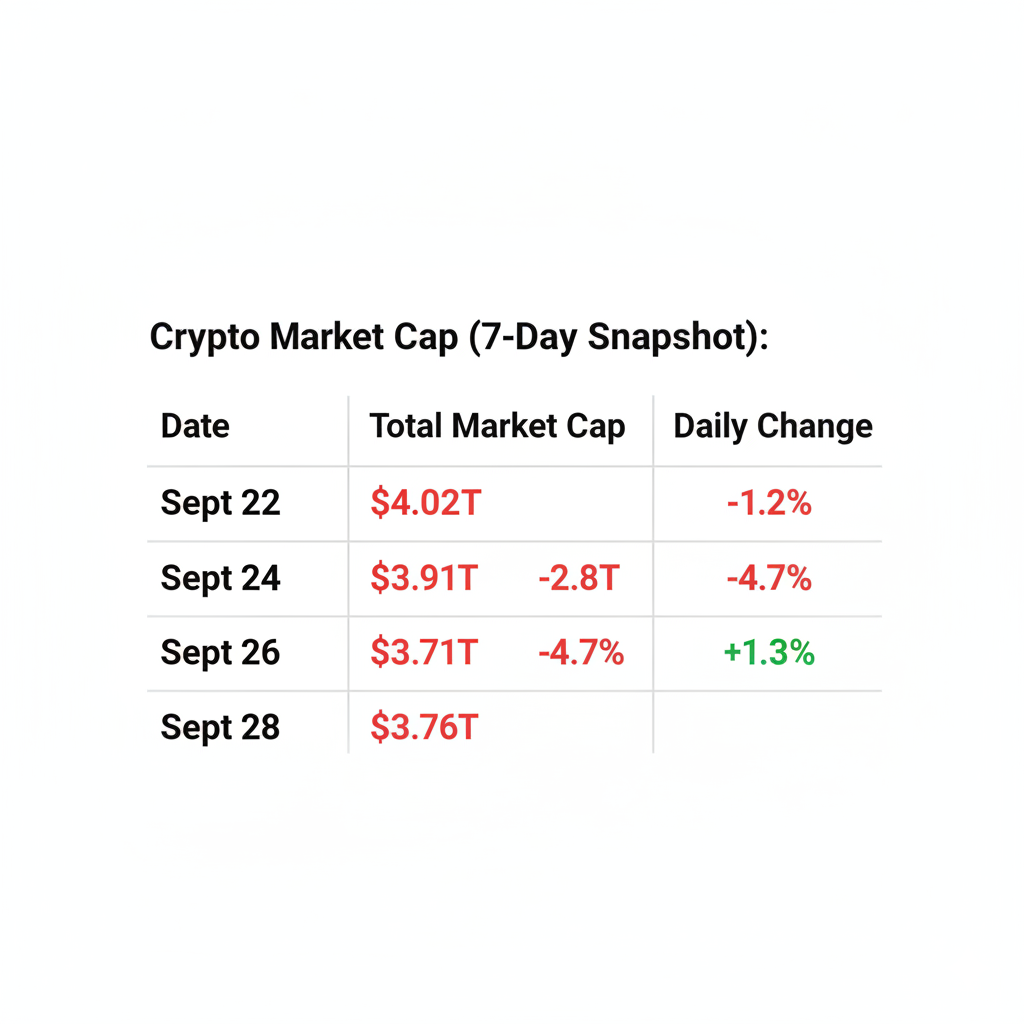
The total cryptocurrency market capitalization plummeted from over $4 trillion earlier in September to approximately $3.71 trillion by September 26, representing a devastating 4.7% single-day decline that erased gains accumulated during the month’s bullish start. According to CoinMarketCap data, the market has shed $162 billion in value, with trading volumes surging to $178.5 billion as panic selling intensified across major exchanges. The selloff accelerated throughout the week, with the market posting consecutive red days that pushed September into negative territory despite early-month optimism.
Bitcoin, the world’s largest cryptocurrency, crashed below the critical $111,000 support level from its August peak of $124,000, currently trading around $109,145 with a market capitalization of $2.18 trillion. The flagship digital asset has maintained Bitcoin dominance at 57.8%, but this hasn’t shielded it from the broader market rout. Ethereum fared worse, dropping below the psychologically important $4,000 threshold to trade at $3,999 on Binance, marking a 0.38% decline in 24 hours and extending weekly losses to nearly 10%. ETH’s market cap contracted to approximately $485.6 billion as institutional outflows accelerated.
Major altcoins experienced even steeper declines, with Solana falling to $201, XRP dropping to $2.79, and Dogecoin sliding to $0.231. Cardano, Shiba Inu, and other popular tokens also suffered significant losses, reflecting broad-based investor capitulation across the altcoin market. The Altcoin Season Index plummeted as traders fled riskier assets, with some reallocating capital back to Bitcoin as anxiety peaked throughout the ecosystem.
The selloff stems from multiple converging factors that created a perfect storm for crypto markets. Federal Reserve policy uncertainty, strengthened by disappointing U.S. jobs data and geopolitical tensions, boosted the U.S. dollar and made cryptocurrencies less attractive as risk assets. Regulatory uncertainty in the U.S. and Europe, particularly around stricter anti-money laundering measures and exchange compliance requirements, added to investor caution ahead of key regulatory hearings scheduled for late September. Additionally, over $1.65 billion in leveraged long positions were forcibly liquidated, creating a cascade effect that amplified price declines across the board.
Investor sentiment has shifted dramatically from greed to fear, with the Fear & Greed Index registering extreme fear levels as both retail and institutional participants retreat from the market. Bitcoin and Ethereum ETFs recorded massive outflows of $903 million and $796 million respectively during the week of September 22-26, marking the heaviest institutional withdrawals in months. This institutional flight signals a broader risk-off sentiment that has particularly impacted cryptocurrency markets known for their higher volatility profile
Trading activity surged across major exchanges as the selloff intensified, with Binance, Coinbase, and other platforms reporting elevated volumes amid the liquidation cascade. The surge in trading activity reflects both panic selling by overleveraged traders and opportunistic buying by whale entities looking to accumulate at lower prices. Exchange data shows that long liquidations dominated short liquidations by a significant margin, indicating that bullish traders bore the brunt of the market correction.
Historically, September has proven challenging for cryptocurrency markets, with Bitcoin posting negative returns in eight of the last eleven Septembers, averaging monthly losses of approximately 8.7%. The current selloff aligns with this seasonal pattern, though the magnitude of losses has been amplified by increased leverage, institutional participation, and macroeconomic headwinds that weren’t present in earlier cycles. Previous “Red Septembers” in 2018, 2019, and 2022 saw similar patterns of early-month optimism followed by sharp corrections.
Crypto analysts and fund managers are divided on the outlook, with some viewing the current correction as a healthy reset after months of gains, while others warn that further downside remains possible if macroeconomic conditions deteriorate. “The September curse is playing out exactly as historical data suggests, but the scale of institutional involvement means recovery patterns may differ from previous cycles,” noted one crypto fund manager tracking the selloff dynamics.finance.
Quick Investor Checklist:
- Monitor Bitcoin dominance levels (currently 57.8%)
- Track Federal Reserve policy announcements and regulatory hearing outcomes
- Watch for sustained trading volume above $150 billion as potential reversal signal
- Observe ETF flow data for institutional sentiment shifts
Retail Watch: Small investors should avoid panic selling and instead focus on dollar-cost averaging strategies during this volatile period. The current correction, while severe, represents typical cryptocurrency market cycles where sharp selloffs often precede recovery phases. Retail traders should maintain proper risk management, avoid excessive leverage, and consider the long-term fundamentals of their holdings rather than reacting to short-term price movements.
For retail investors, this Red September selloff presents both risks and opportunities, requiring careful navigation between short-term volatility and long-term potential. While the immediate outlook remains uncertain with regulatory hearings and macroeconomic data releases pending, historical patterns suggest that cryptocurrency markets often recover strongly following September corrections. Investors should focus on fundamental analysis, maintain disciplined risk management, and avoid the emotional trading that has characterized this selloff period.
The cryptocurrency market’s current turmoil reflects the inherent volatility that defines digital assets, reminding investors that significant corrections remain an integral part of the crypto cycle. While the $160 billion wipeout has been painful for holders, September’s seasonal weakness has historically given way to stronger Q4 performance, provided that regulatory clarity improves and macroeconomic conditions stabilize in the coming months.