India faces mounting financial and strategic pressure as potential US penalties and shrinking Russian oil discounts threaten to disrupt energy security and inflate the country’s import bill, with significant repercussions for inflation, investor sentiment, and refining margins.
Introduction
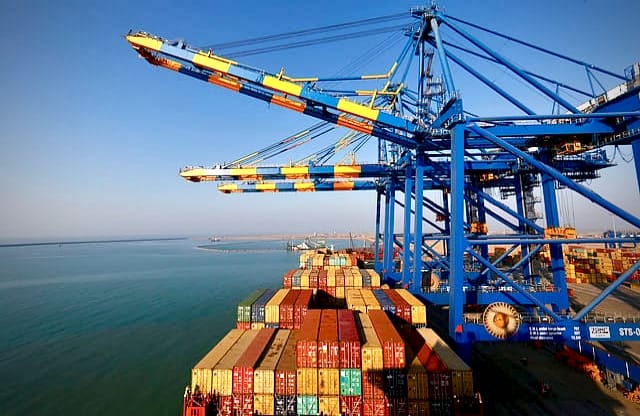
India could be staring at a staggering $9–11 billion increase in its annual oil import bill if US penalties on Russian oil purchases come into force. As the world’s third-largest oil importer, a forced pivot away from discounted Russian crude would reverberate across markets, inflation metrics, and investment prospects123.
Market Overview
India’s Reliance on Russian Crude
Since the start of the Russia-Ukraine conflict in 2022, India has sharply ramped up its imports of discounted Russian crude, diversifying away from costlier Middle Eastern and African suppliers. Before the conflict, Russian oil accounted for less than 0.2% of India’s crude basket. Today, that share has soared to 35–40%, yielding significant cost savings, bolstering fuel price stability, and supporting the broader economy2453.
- FY24 Oil Import Bill: $137 billion (₹11.4 lakh crore).
- Share of Russian oil imports: From 0.2% pre-war to 35–40% (2025 estimate).
- Major Importers: Reliance Industries Ltd (RIL), Nayara Energy, IOCL, BPCL, HPCL.
Rising Pressure from the West
However, US President Donald Trump’s announcement of a 25% tariff on Indian goods and an unspecified penalty on Russian oil imports—combined with upcoming EU sanctions on fuels refined from Russian crude—pose a dual threat324:
- US Penalty Risk: Possible secondary sanctions on shipping, insurance, and finance for Indian companies dealing in Russian crude.
- EU Sanctions (effective Jan 2026): Ban on imports of fuels from Russian-origin crude, impacting India’s lucrative exports to the West.
This scenario puts India in a precarious position, having to choose between energy security and geopolitical alignment with the West.
Surging US Oil Imports as a Partial Offset
India has accelerated its oil imports from the US, rising over 50% in H1 2025 compared to the prior year. In July 2025, the US share in India’s crude basket climbed from 3% to 8%, amid an expected 150% annual jump. Nonetheless, US and Latin American barrels often trade at higher prices versus current Russian discounts6789.
Expert Opinions (According to Analysts)
“If a USD 5 per barrel discount is lost across 1.8 million barrels per day, India’s import bill could increase by USD 9–11 billion annually. If global prices rise further due to reduced Russian supply, the cost could be even higher,” says Sumit Ritolia, Lead Research Analyst at Kpler13.
“Together, the US and EU measures sharply curtail India’s crude procurement flexibility, raise compliance risk, and introduce significant cost uncertainty,” notes Ritolia.
“This is a squeeze from both ends. The secondary sanctions risk is especially acute for Indian refiners using global shipping, insurance, and financial services,” remarks an expert quoted by the Indian Express10.
“The operational margins of publicly listed companies such as Reliance Industries (NSE: RELIANCE), Nayara Energy, and PSU majors could face downward pressure if forced to procure non-discounted oil,” financial analysts highlight.
Industry Concerns
- Refiners’ Margins: Record profits posted by Indian oil majors may come under stress if discounts disappear.
- Export Impact: Sales to countries restricting direct Russian crude may decline should the EU enforce new rules.
- Stock Market Dynamics: Share prices of key refiners and state-run oil marketing companies could see increased volatility in the short term, with negative sentiment weighing on oil majors (RELIANCE, BPCL, HPCL).
Government Position
Despite pressure, Indian officials have denied any formal policy change so far, and have reiterated that purchases are guided by national interest and market economics. Discussions continue on available options and strategic adjustments11.
Impact on Investors
1. Oil & Gas Stocks Reacting
On news of heightened US and EU scrutiny, shares of refining giants—Reliance Industries, Nayara Energy, and IOC—witnessed increased trading volumes and volatility. The threat of squeezed refining margins and potential loss of Russian discounts has triggered cautious sentiment among investors.
2. Inflation and Currency Outlook
With India importing 88% of its crude needs, any surge in import prices directly impacts inflation, the fiscal deficit, and the rupee’s strength. A $9–11 billion bump in oil costs could feed into headline inflation, push pump prices higher, and erode the purchasing power of households. Central bank policy may also tilt hawkish if inflation persists1512.
3. Broader Impact on the Economy
Higher oil costs can have secondary effects: rising freight, logistics, and manufacturing costs; increased current account deficit; potential downward revisions to GDP growth forecasts. Macro-sensitive midsize companies and sectors that depend on energy prices may see their earnings outlook darkened.
Key Points
1. India’s Oil Import Bill Faces Unprecedented Risk
- A loss of Russian discounts may inflate India’s annual oil import bill by $9–11 billion123.
- Current discounts keep the import bill in check, benefiting trade balance and inflation.
2. Geopolitics Redefining India’s Energy Strategy
- US secondary sanctions risk adds to the complexity of global oil trade.
- EU measures, effective Jan 2026, may further limit India’s ability to process and export Russian-crude derived fuels.
3. Stocks and Refiners Under the Scanner
- Reliance Industries (RELIANCE), Nayara Energy, BPCL (BPCL), and HPCL (HPCL) could see margin compression.
- Record profits in FY24 and FY25 were fuelled by access to discounted crude, a dynamic now at risk313.
4. Supply Chain Shifts and Policy Uncertainty
- India sharply increased crude imports from the US, now over 8% of the total by July 2025, but higher prices limit the effectiveness as a substitute678.
- Procurement from alternative suppliers (Middle East, Africa, Latin America) may not match Russian discounts, escalating overall costs.
5. Inflation, Rupee, and Investor Sentiment in Focus
- A sudden rise in oil costs would likely push inflation higher, weigh on the rupee, and spook equity markets, especially in oil-sensitive sectors.
Conclusion
The growing risk of US penalties and tighter EU sanctions marks a watershed for India’s energy security and fiscal stability. The potential $9–11 billion spike in the annual import bill underscores India’s reliance on Russian crude and the deep economic value of energy discounts. While New Delhi explores ways to shield its refiners and consumers from external shocks, policy clarity, diversification, and savvy geopolitical engagement will remain key.
According to analysts, India must rapidly work through alternate supply strategies and innovative financing models to manage compliance risk and hedge against further disruptions. For investors, tracking OMC stock valuations, rupee trends, and central bank commentary on inflation will be critical in the weeks ahead.
Data Visuals
Oil Import Shares by Country (2022–2025)
Key Stocks Impacted
- Reliance Industries Ltd (NSE: RELIANCE)
- Nayara Energy
- Indian Oil Corporation (NSE: IOC)
- Bharat Petroleum Corp Ltd (NSE: BPCL)
- Hindustan Petroleum Corp Ltd (NSE: HPCL)
Market Data Snapshot (August 2025)
| Stock | Price | 1M % Chg | Relevance |
|---|---|---|---|
| RELIANCE | ₹2,740 | -7% | Largest private refiner |
| BPCL | ₹495 | -5% | State oil company |
| HPCL | ₹274 | -8% | State oil company |
| Nayara Energy | Unlisted | NA | Major Russian oil blender |