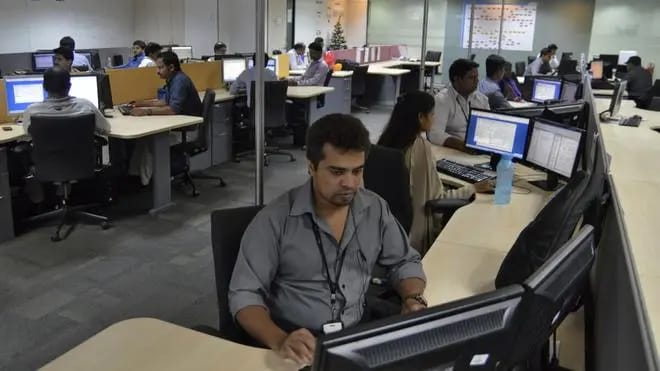
RBI’s new security mandates arrive as digital payments cement their role as the cornerstone of the Indian economy in Q4 2025.

India’s digital payment revolution achieved a momentous milestone in the final quarter of 2025, with the Unified Payments Interface (UPI) crossing the 20 billion monthly transaction mark for the first time in August, settling at ₹24.85 lakh crore in value. This blistering pace, which represents a 34% surge in volume year-on-year, is not merely a number; it is a profound indicator of the Indian economy’s fundamental shift toward a digital-first architecture. This explosive growth comes as the Reserve Bank of India (RBI) tightens its focus on integrity, rolling out new authentication directives designed to secure the nation’s rapidly maturing fintech market, valued at over USD 44 billion this year.
The journey to this peak was rapid and sustained throughout 2025. After registering 19.47 billion transactions in July, the platform’s volume decisively cleared the 20 billion hurdle in August. While the total transaction value of ₹24.85 lakh crore in August was marginally lower than July’s peak, the long-term trend remains unequivocally upward, underpinned by a 21% year-on-year increase in value. UPI now claims an astonishing 85% share of all digital transactions within India. Critically, the platform’s utility has expanded far beyond simple peer-to-peer transfers, with key segments like financial payments, debt collection, securities brokerage, and essential goods transactions forming the bulk of its immense volume. The public sector, spearheaded by the State Bank of India, has taken a dominant role as the top remitter, while private sector banks like Yes Bank lead the way in payment reception, illustrating the widespread institutional adoption of this public digital infrastructure.
The triumph of UPI acts as the single largest catalyst for the broader Indian fintech market, which is projected to grow at a robust 16.65% CAGR through to 2030. This rapid expansion is fundamentally linked to India’s Digital Public Infrastructure (DPI) stack. The Account Aggregator (AA) framework, a critical layer of the stack, is maturing and is expected to channel nearly $300 billion in credit flows to MSMEs and retail customers by year-end. This consent-based data sharing mechanism is enabling sophisticated digital lending models to assess creditworthiness in real-time, drastically reducing approval times and opening up credit to millions of underserved borrowers, especially small businesses formalising their operations post-GST. While global investment has remained cautious, leading to investors focusing on smaller, early-stage deals, the structural drivers of market expansion—DPI, formalisation, and a massive consumer base—remain firmly in place.
In late September 2025, the RBI reinforced the integrity pillar of the ecosystem by issuing the “Authentication Mechanisms for Digital Payment Transactions Directions, 2025”. This pivotal set of guidelines mandates a minimum of two-factor authentication (2FA) for all domestic digital payment transactions, with at least one factor required to be dynamic. The directive also introduces mandatory risk-based checks for high-risk transactions, often notified via platforms like DigiLocker. According to financial analysts, this move is crucial, as it tackles rising cybersecurity risks without throttling innovation. They assert that the formalisation of a risk-based approach will encourage providers to deploy next-generation authentication methods, such as biometrics, moving beyond the often-compromised SMS-based OTP, thereby securing the next wave of high-value digital transactions.
What this means for Indian retail investors.
The UPI revolution has democratised financial access, extending its reach directly into the capital markets. Retail investors are increasingly using UPI for mandates related to initial public offerings (IPOs), mutual fund SIPs, and direct payments to securities brokers. The mandatory shift to a robust 2FA system under the new RBI directions is a decisive positive for the individual investor. It translates directly into enhanced security and greater trust when making investments or payments via digital channels. Furthermore, the rising use of UPI for payments to securities brokers is a clear indicator that the interface is not just a payment tool, but a crucial element of the financialisation of household savings. As the system continues to simplify high-frequency, low-ticket transfers via features like UPI Lite, and introduces Credit on UPI functionality, it is effectively lowering the barrier to entry for small investors to participate in the formal economy.
The immediate future of India’s digital payment ecosystem is anchored by ambitious targets and global expansion. The National Payments Corporation of India (NPCI) is driving towards a goal of 1 billion daily UPI transactions by FY27. This massive scale will be powered by innovation, particularly the widespread rollout of Credit on UPI, allowing users to access pre-sanctioned credit lines via the interface, and the increasing global adoption, with UPI already live in seven countries including France and the UAE. As India pushes for UPI to become the standard within the BRICS group, its internationalisation will further boost its profile and the remittance economy. Investors should watch the integration of the RBI’s new security mandates (effective April 1, 2026) for their impact on compliance costs for leading fintech players like PhonePe, Google Pay, and Paytm, which dominate the market. The sector’s key catalysts will be the successful rollout of the Credit on UPI feature and the continued development of the Account Aggregator framework to unlock lending, while the primary risks remain the zero-MDR policy and the continuous challenge of cyber-fraud.