RBI Keeps Repo Rate Steady at 5.5%; Neutral Stance Maintained Amid Mixed Growth, Inflation Signals India’s central bank holds key interest rates, signaling a cautious approach as it balances economic growth against persistent inflationary pressures.
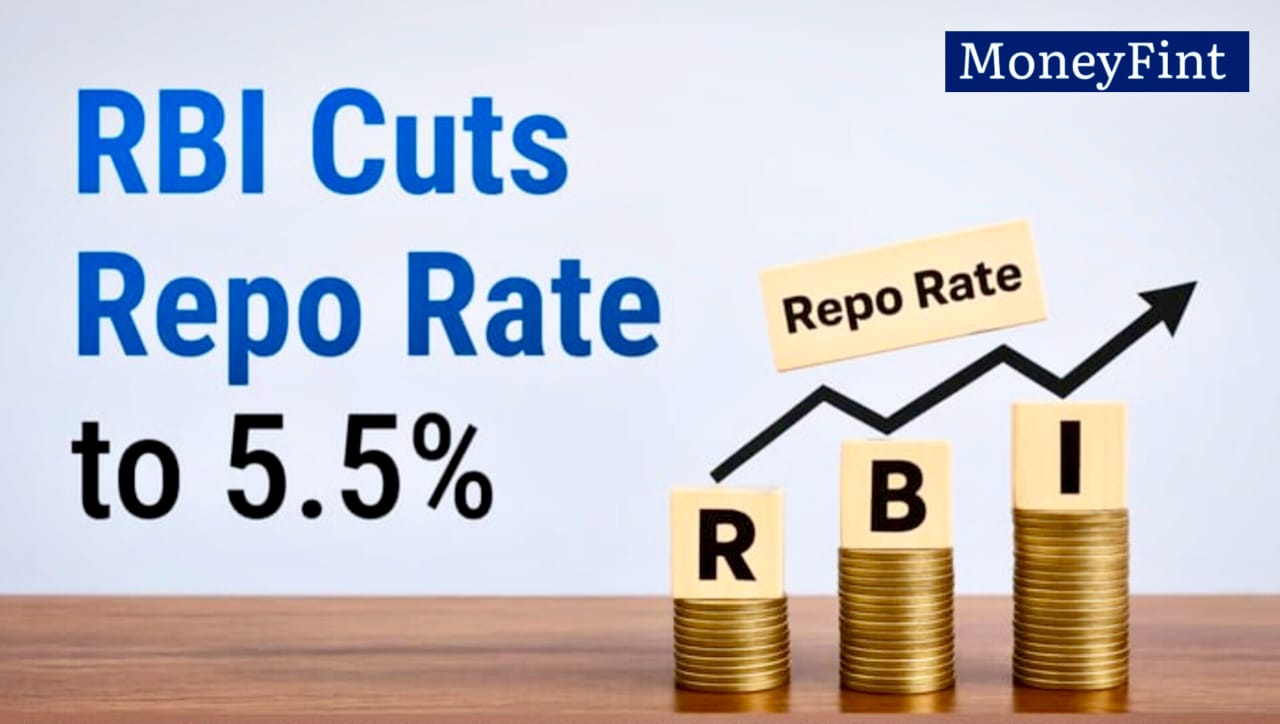
The Reserve Bank of India (RBI) has decided to keep the repo rate unchanged at 5.5%, maintaining its “neutral” stance in its latest monetary policy review. This decision was widely anticipated by analysts and marks a period of stability following a series of rate hikes. The RBI’s Monetary Policy Committee (MPC) is treading a fine line, aiming to support India’s economic growth momentum while ensuring that inflation remains within its target band. This move reflects the central bank’s assessment of a complex economic landscape, where domestic growth remains robust despite global headwinds, but retail inflation, particularly in food items, continues to be a concern.
Over the past three to six months, the RBI has been on a vigilant watch, with its focus split between taming inflation and nurturing economic growth. The preceding period saw the repo rate rise from a record low to its current level in an effort to combat rising prices. The global economic environment, marked by geopolitical tensions and supply chain disruptions, has added to the complexity. Domestically, while core inflation has shown signs of moderation, volatile food prices, particularly of vegetables and pulses, have kept the headline Consumer Price Index (CPI) elevated. The RBI’s neutral stance signifies that it is not committed to a specific direction for future rate changes, retaining flexibility to act based on incoming data.
The RBI’s decision to pause is driven by a combination of factors. On the inflation front, while the overall CPI is sticky, the central bank believes that the measures taken so far are working and that future price pressures may ease. The recent government steps to manage food supplies and the expected improvement in agricultural output due to a normal monsoon could help bring down food inflation. On the growth side, India’s economy has demonstrated remarkable resilience. High-frequency indicators, such as GST collections, manufacturing PMI, and vehicle sales, point towards sustained economic activity. The government’s continued focus on capital expenditure is also providing a significant boost to infrastructure and allied sectors. However, the RBI remains cautious about the external environment, including slowing global growth and potential spillover effects from international markets.
According to analysts at major brokerage houses, the RBI’s decision is prudent. “The central bank is in a wait-and-see mode,” stated a lead economist from a Mumbai-based research firm. “They’ve done the heavy lifting on the rate front and are now giving the previous hikes time to fully transmit through the economy. The current pause allows them to assess the impact of these changes on credit growth and investment cycles.” Expert commentary suggests that the RBI will continue to be data-dependent, with future policy actions hinging on the trajectory of both inflation and growth data points in the coming quarters.
What This Means for Indian Retail Investors
For Indian retail investors, the RBI’s decision to maintain the status quo offers a degree of stability and predictability. Here’s a breakdown of the key implications:
- Fixed-Income Investments: The pause in the repo rate means that interest rates on fixed deposits (FDs) and other small savings schemes are likely to remain stable. Investors looking for a secure, low-risk return can lock in the current attractive rates.
- Equity Market: A stable interest rate environment is generally positive for the equity markets. It reduces the cost of borrowing for companies, which can boost their profitability and encourage new investments. Sectors that are highly sensitive to interest rates, such as banking, real estate, and automobiles, may see increased investor interest. The predictable policy environment can also attract foreign portfolio investment (FPI) flows.
- Home Loans: For those with floating-rate home loans, the pause offers a reprieve from rising EMI burdens. New borrowers may also find that loan rates have stabilized, making it a good time to consider a purchase.
- Overall Market Sentiment: The RBI’s measured approach instills confidence in the central bank’s ability to manage the economy effectively, which can contribute to a positive and stable market sentiment. It suggests that the RBI is not overly concerned about an immediate and sharp spike in inflation or a significant slowdown in growth.
What’s Next
Looking ahead, the RBI’s future policy moves will be dictated by key data releases. The upcoming CPI and WPI inflation figures will be crucial, as will the Q3 GDP growth numbers. The central bank will also closely monitor the impact of the ongoing festive season on consumption and price levels. Any significant changes in the global macroeconomic scenario, particularly the actions of major central banks like the U.S. Federal Reserve, will also influence the RBI’s decisions. The next few months will be critical in determining whether the RBI will pivot towards a rate cut or be forced to resume a tightening cycle.