Legacy automakers leverage scale and infrastructure as supply chain disruptions expose startup vulnerabilities
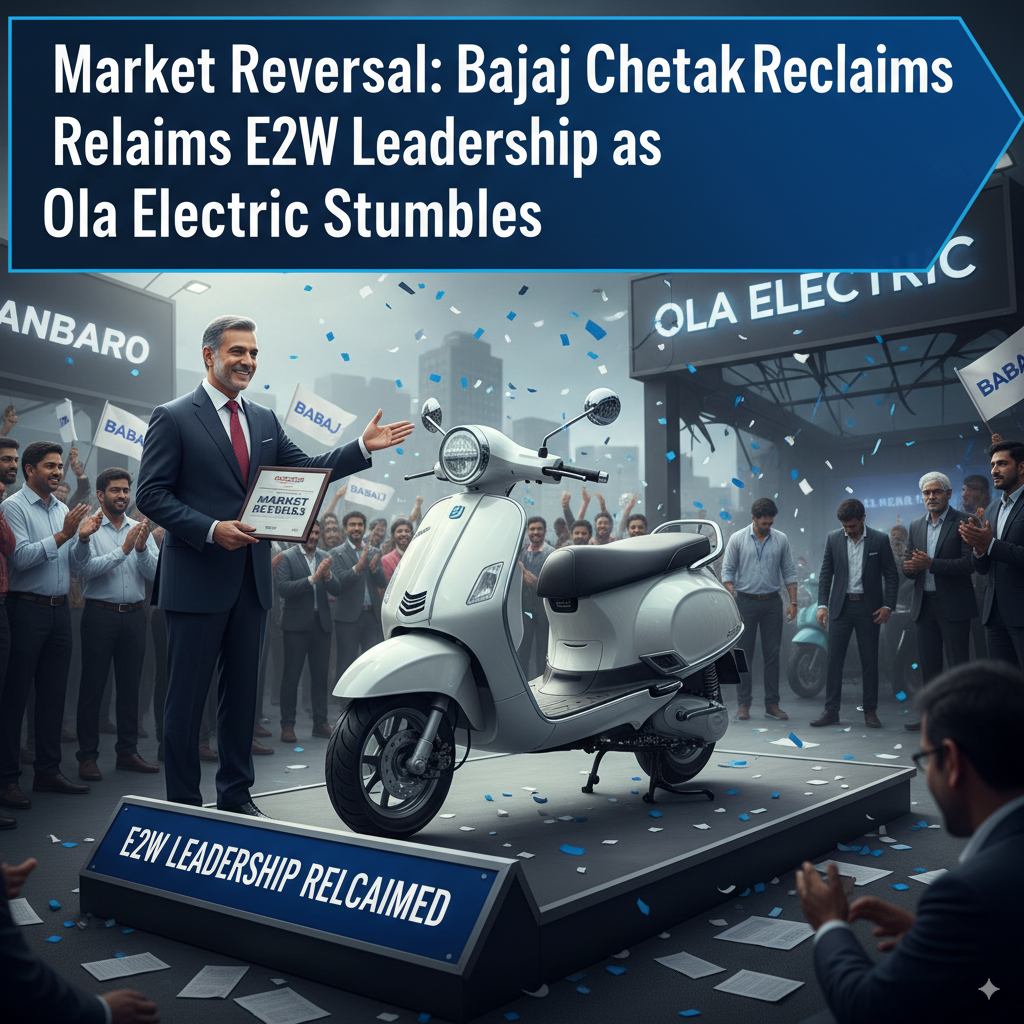
India’s electric two-wheeler sector has witnessed a dramatic reversal of fortunes, with Bajaj Auto’s Chetak brand surging back to reclaim the second position in monthly sales while former market leader Ola Electric tumbles to fifth place.
According to the latest Vahan registration data, Bajaj sold 5,935 units in September 2025, capturing a commanding 20% market share. This remarkable comeback follows the Pune-based automaker’s recovery from rare earth magnet supply chain disruptions that severely hampered August production.
The contrast couldn’t be starker for Ola Electric. The Bengaluru-based startup, which once dominated over half the market, managed just 3,694 unit sales in September—a mere 12% market share that underscores how quickly fortunes can change in India’s rapidly evolving EV landscape.
From Startup Darling to Market Casualty
Ola Electric’s trajectory reads like a cautionary tale of meteoric rise followed by precipitous decline. The Bhavish Aggarwal-led company commanded a dominant 34.45% market share in FY2024, riding high on investor enthusiasm and aggressive pricing strategies.
The cracks began showing in mid-2025. By June, Ola had slipped to third place as TVS Motor and Bajaj Auto surged ahead. The decline accelerated through July, with market share plummeting to 17.35% from 38.83% a year earlier. Sales collapsed from 41,802 units in July 2024 to just 17,848 units in July 2025—a devastating 57% year-on-year drop.
While Ola briefly regained second position in August, this was largely due to Bajaj’s supply chain woes rather than any operational recovery.
Legacy Players Assert Dominance
Traditional manufacturers have systematically reclaimed territory from EV-pure startups. Bajaj Auto and TVS Motor now hold the top two positions, with combined market shares of 22% and 24% respectively as of June 2025.
Bajaj’s electric portfolio has been particularly impressive, recording 112% year-on-year growth in FY2025. This growth trajectory, interrupted only temporarily by the rare earth magnet shortage, demonstrates the resilience that comes with decades of manufacturing expertise.
“We’re witnessing a fundamental shift where established manufacturers are leveraging their core competencies—dealer networks, service infrastructure, and brand trust—to dominate the electric transition,” explains Rajiv Bajaj, Managing Director of Bajaj Auto.
Supply Chain Disruptions Expose Vulnerabilities
The rare earth magnet shortage that emerged in August 2025 served as a stress test for the industry, revealing the operational robustness of different players. While Bajaj saw its sales plunge 37% year-on-year to 10,635 units in August, the company’s swift resolution of sourcing issues and subsequent production ramp-up demonstrated operational agility.
Ather Energy and TVS Motor also flagged similar risks, but their diversified supplier bases and stronger balance sheets provided better cushioning against disruptions.
Ola’s Operational and Financial Headwinds
Beyond competitive pressures, Ola Electric faces mounting operational challenges. The company’s Q1 FY2026 results painted a concerning picture: operating revenue nearly halved year-on-year while net losses widened to ₹428 crore.
Vehicle deliveries dropped sharply to 68,192 units from 125,198 units in the corresponding quarter of the previous year. More troubling, the company’s statutory auditor flagged material weaknesses in internal controls for physical verification of scooters—raising questions about inventory management and operational oversight.
Investor confidence has eroded correspondingly. SoftBank Group, once the second-largest shareholder, reduced its stake from 17.83% to 15.68%. Tiger Global Management, Alpha Wave Ventures, and Hyundai Motor have similarly trimmed their positions.
Market Consolidation Underway
Industry data reveals a clear consolidation trend. In FY2025, TVS and Bajaj together captured approximately 40% of the E2W market, up from 31% in FY2024. This concentration reflects the advantages of scale, established distribution networks, and operational experience.
“The market is maturing beyond the initial startup-led enthusiasm phase,” notes a senior industry analyst. “Consumers are increasingly prioritizing reliability, service support, and brand trust over novelty—factors that favor established manufacturers.”
Investment Implications and Strategic Outlook
Winners and Losers Emerge
Legacy Strength: Bajaj Auto and TVS Motor emerge as more resilient investment propositions, demonstrating ability to navigate supply chain disruptions while scaling electric portfolios effectively.
Startup Struggles: New-age players like Ola Electric face an increasingly challenging path, with declining sales, widening losses, and investor exits signaling operational difficulties.
Market Dynamics: The sector remains highly competitive with dramatic month-to-month fluctuations in market share, requiring investors to monitor Vahan registration data closely.
Key Catalysts Ahead
Festive Season Performance: The crucial October-December period will test each player’s ability to meet heightened consumer demand while maintaining supply chain stability.
Policy Framework: The government’s Production Linked Incentive (PLI) scheme and the new EMPS 2024 policy will continue shaping competitive dynamics and local manufacturing incentives.
Product Innovation: Upcoming launches like TVS Orbiter and Ather’s EL platform will intensify competition across price segments, potentially reshaping market shares.
Risk Factors to Monitor
Supply Chain Vulnerabilities: Rare earth magnet shortages remain a medium-term risk, particularly for companies with less diversified supplier networks.
Financial Health: Quarterly earnings will provide critical insights into company-specific operational efficiency and cash burn rates.
Regulatory Environment: Evolving safety standards and subsidy policies could disproportionately impact different players.
The Road Ahead
India’s electric two-wheeler market stands at an inflection point. While overall sector growth remains robust, the competitive landscape increasingly favors players with operational scale, financial resilience, and established market infrastructure.
For investors, this transition suggests a more mature, stability-focused approach rather than the high-beta growth story that characterized the sector’s early years. The winners will likely be those who can combine electric innovation with traditional automotive strengths—a formula that legacy manufacturers appear better positioned to execute.
The Bajaj-Ola reversal may well be remembered as the moment India’s EV market grew up, moving beyond startup euphoria to sustainable, profitable growth built on operational excellence and customer trust.