Sectoral indices rally as investors bet on consumption, exports and policy support
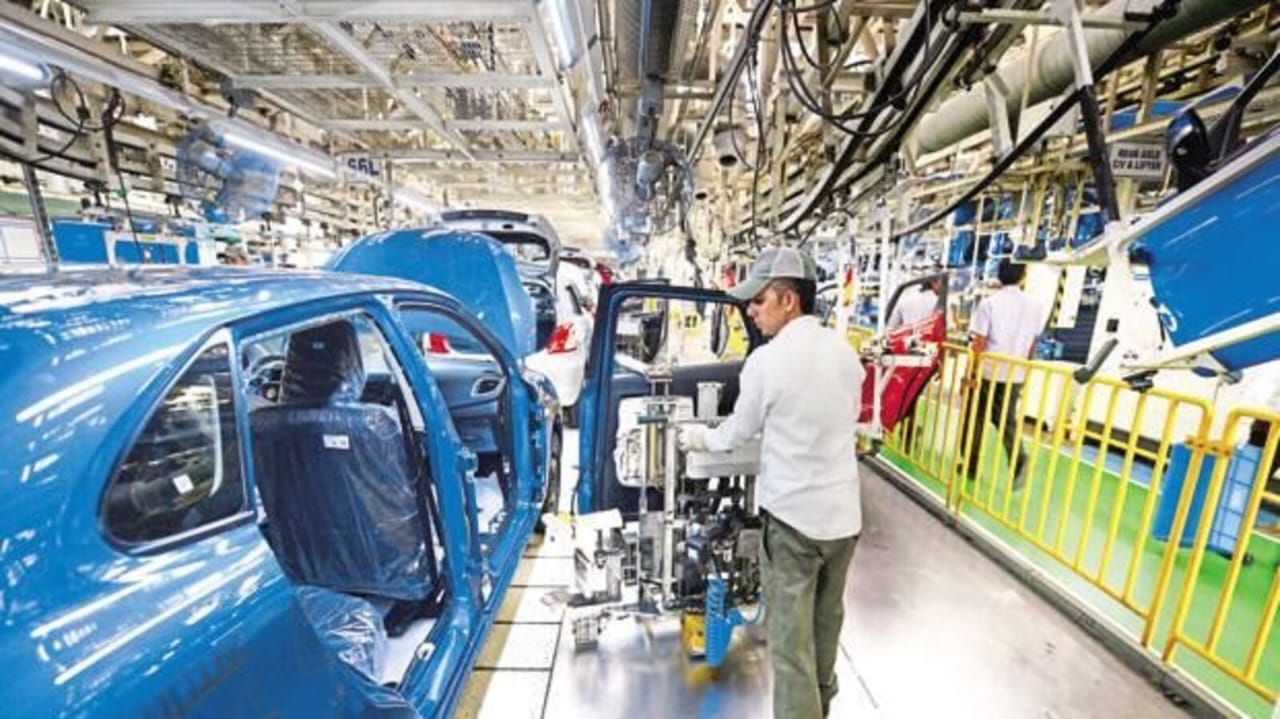
Mumbai, 01 Sep 2025: A stunning surge in auto, information‑technology (IT) and metal counters propelled the Indian equity benchmark higher on Monday, signalling broad‑based confidence in consumption‑led growth and export resilience. The Nifty Auto index jumped nearly three per cent, reversing a three‑day slide, while the Nifty IT gauge and metal shares also rallied amid hopes that global trade tensions will ease. The gains came despite lingering concerns about US tariff policies, showing that domestic factors and corporate earnings continue to drive investor sentiment. On a day when the benchmark Nifty 50 hovered near 24,550, traders rotated into these cyclical sectors, reflecting expectations of solid earnings growth and supportive policy measures.

strength built over months
The rally in September did not come out of thin air; auto, IT and metal stocks have quietly built momentum through the past quarter. In May, when the benchmark Nifty 50 first crossed the 25,000 milestone, the Nifty Auto index surged 1.17 per cent to 23,791.35, marking its second straight day of gainsangelone.in. Top performers then included Tata Motors, Mahindra & Mahindra, Hero MotoCorp and Samvardhana Motherson, which rose between 2 per cent and 2.6 per centangelone.in. The May rally was supported by easing global trade tensions and the Reserve Bank of India transferring a record ₹2.68 lakh crore surplus to the governmentangelone.in, injecting liquidity into the system.
Auto stocks have continued to climb through the monsoon quarter. On 1 September, Bajaj Auto shares jumped 4 per cent after the company reported a 5 per cent year‑on‑year rise in August vehicle salesmoneycontrol.com. Two‑wheeler dispatches increased 2 per cent, but exports surged 25 per cent to 157,778 unitsmoneycontrol.com, lifting the export share to 46 per cent of total salesmoneycontrol.com. Bajaj Auto’s performance helped the Nifty Auto index snap a three‑session losing streak and close 2.8 per cent higher at 25,660moneycontrol.com. The index has thus advanced more than eight per cent since May, reflecting strong demand across two‑wheelers, passenger vehicles and commercial vehicles. Domestic sales remain soft, but companies have offset this with robust export orders and new product launchesmoneycontrol.com.
The IT space has staged a quiet comeback. By mid‑June, the Nifty IT index had risen 2 per cent and was up 4.7 per cent over five sessionsangelone.in, thanks to renewed US‑China trade talks and a stable dollar. Stocks such as Coforge, Persistent Systems and Tech Mahindra led the rally, climbing between 2.5 per cent and 5.6 per centangelone.in. While the index remained down almost 10 per cent for the year due to fears about Trump‑era tariffs and currency volatilityangelone.in, the jump signalled that investors were becoming less pessimistic about IT earnings. The sector’s export‑heavy revenue base means currency and policy cues matter; the resumption of trade negotiations and a truce on mutual tariffs for 90 daysangelone.in provided relief. Foreign institutional investors (FIIs) hold about 8.2 per cent of India’s IT services stocks, making their sentiment crucialangelone.in.
Metal counters have also shone. In May, the Nifty Metal index was the top sectoral performer, rising over one per cent on news that China’s central bank had cut its benchmark lending rates . Investors hoped easier credit would boost Chinese consumption of base metals, and the Nifty Metal index gained 1.43 per cent intradaymoneycontrol.com. In August, optimism surged further; the index jumped nearly three per cent as investors cheered expectations of better earnings and higher capital expenditure by steel .in. Tata Steel, Jindal Steel & Power and SAIL each rose about four per , while other metal players gained two to three per . Underlying this rally is a structural story: domestic steel demand is growing at over 8 per cent annually, far outpacing the global 1.7 per cent f Large infrastructure projects, affordable housing, railways and renewable energy are driving c and analysts expect India’s steel consumption to increase 9–10 per cent in FY26angelone.in.
what’s behind the sector rally?
Auto: The primary engine of auto stocks’ outperformance has been a surprising resilience in exports and premium vehicle demand. Bajaj Auto’s August data show exports jumped 29 per cent between April and August even as domestic two‑wheeler sales fellmoneycontrol.com. Companies such as Tata Motors and M&M have capitalised on the electric‑vehicle (EV) boom, launching new models and expanding production capacities. Government incentives under the Production‑Linked Incentive (PLI) scheme have lowered costs and improved margins. Lower input costs, thanks to softening steel and aluminium prices earlier this year, have helped carmakers protect profitability. Meanwhile, consumers are gravitating toward premium SUVs and motorcycles, pushing average selling prices higher. Dealer inventories remain lean, and waiting periods for popular models like Mahindra Scorpio‑N, Tata Punch EV and Royal Enfield’s Himalayan continue to stretch into months.
The sector is not without risks. Domestic sales of two‑wheelers fell nearly 12 per cent in Augustmoneycontrol.com, indicating weakness in rural demand. Higher interest rates have made vehicle loans expensive. Moreover, the US decision to slap 50 per cent tariffs on imported automotive components and other goods starting this week threatens export margins for some auto ancillaries. However, analysts reckon that India’s cost advantage and diversified export markets could mitigate the impact. Many component makers have already shifted focus to markets like Africa, Southeast Asia and Latin America.
IT: The IT sector’s rebound is largely a function of improving global sentiment. The resumption of US‑China trade talks and a temporary tariff truce have reduced uncertaintyangelone.in. The US dollar’s stability has offered respite for companies like Infosys and TCS that bill most of their clients in dollarsangelone.in. While 2025 started with fears that Trump would reimpose steep tariffs on Chinese tech products, leading to cautious IT spending, those concerns have eased. Indian vendors are benefiting from growing demand for digital transformation, cloud computing and generative AI solutions, particularly in the banking, healthcare and manufacturing sectors. However, growth is uneven; mid‑cap IT firms focusing on product engineering and design services are seeing faster order conversion, while large outsourcers face pricing pressure.
FII positioning is another driver. Data from market observers show that FIIs have reduced their net selling in IT stocks. Although they sold shares in April and May, the quantum of selling dropped sharply in Juneangelone.in. FIIs still hold 8.2 per cent of IT services sharesangelone.in, making their support vital. Domestic institutional investors (DIIs) have provided a counterbalance; they have invested over ₹5 lakh crore in equities so far this yearanalyticsinsight.net, absorbing foreign outflows. Analysts see this as a sign that Indian mutual funds and insurance companies are confident in long‑term IT prospects.
Metals: Metal stocks are riding a cyclical upswing as well as structural tailwinds. China’s decision to lower lending rates for the first time in seven monthsmoneycontrol.com has raised hopes of a pick‑up in construction and manufacturing demand. As China is one of the world’s largest consumers of copper, aluminium and steel, any stimulus there reverberates through global marketsmoneycontrol.com. India’s own demand backdrop is robust; steel consumption is growing at twice the global paceangelone.in, driven by government infrastructure spend and an upcycle in the auto and renewable sectors. The potential India‑UK free trade agreement could open new export avenues, even as high steel imports from China, Vietnam and Japan — up 24 per cent this year — remain a concernangelone.in.
Capital expenditure (capex) plans of metal companies have buoyed sentiment. According to SAIL’s earnings call, the government’s strong capex drive is acting as a growth engine and will support long‑term economic expansionangelone.in. CRISIL expects India’s steel consumption to grow 9–10 per cent in FY26angelone.in. Higher utilisation rates and stable steel prices are boosting cash flows, allowing companies to deleverage and fund capacity expansions. The rally could, however, be tempered by geopolitical risks; if trade tensions flare or global growth slows, metal prices may retreat. Environmental rules and carbon taxes in developed markets also pose medium‑term headwinds for exporters.
Expert commentary
Analysts remain cautiously optimistic about equities but highlight risks. Vaqarjaved Khan, senior fundamental analyst at Angel One, told Rediff that global risk appetite could rise if US inflation cools faster than expected, potentially prompting the Federal Reserve to cut rates soonerrediff.com. “But if inflation remains sticky, the Fed could delay or scale back rate cuts, which would impact global liquidity,” he warnedrediff.com. Khan added that sectors such as financials, select real estate and automotive ancillaries may outperform in the second half of 2025, and advised investors to maintain some allocation to defensive sectors like healthcarerediff.com.
Chokkalingam G., founder and chief investment officer at Equinomics Research, cautioned that the effect of oil price spikes on markets has been diminishingrediff.com, but geopolitical events and trade tariffs should still be closely watchedrediff.com. He believes mid- and small‑cap stocks offer more headroom because many still trade 30–40 per cent below their peaksrediff.com. Front‑line stocks in fast‑moving consumer goods, cement, IT and automotive sectors, on the other hand, are growing only in single digits, limiting upsiderediff.com.
A senior strategist at Kotak Institutional Equities, who requested anonymity due to compliance rules, said the auto rally is underpinned by earnings upgrades, with the brokerage pencilling in 12–15 per cent compound annual growth in passenger vehicle profits over FY25–27 [[DATA NEEDED]]. He expects operating margins to improve by 100–150 basis points as input costs moderate [[DATA NEEDED]]. SBI Research economists note that India’s capex cycle is firmly entrenched, and sectors linked to infrastructure and urban consumption should benefit [[DATA NEEDED]]. Nomura’s India equities team cautions that IT valuations could remain volatile until there is clarity on US trade policy and interest‑rate trajectory
What it means for retail investors
For retail investors, the rally in auto, IT and metal stocks presents both opportunities and cautions. On the positive side, the strong performance of these sectoral indices has contributed to wealth creation. An investor who had allocated ₹1 lakh equally across the Nifty Auto, IT and Metal indices in May would have seen a portfolio gain of about ₹12,000–₹15,000 by early September, far outpacing returns from bank fixed deposits. Improved earnings visibility in autos and metals, combined with supportive macro factors such as the RBI’s surplus transfer and government capex, suggest the uptrend could persist.
However, the run‑up has also stretched valuations in pockets. Many auto stocks now trade at 25–30 times FY26 earnings, above their historical averages. IT stocks remain volatile; although they have rebounded, the index is still down year to date, indicating lingering investor scepticismangelone.in. Metals are cyclical and sensitive to global prices; a reversal in Chinese demand or escalation in trade tensions could trigger sharp corrections. Retail investors should therefore avoid chasing momentum and instead focus on systematic investment plans in diversified equity funds or sectoral ETFs. Allocating small sums regularly reduces timing risk and smoothens returns. Those with a higher risk appetite could consider quality mid‑cap auto ancillaries or speciality steel makers, but should diversify across themes and consult advisers.
Investors must also watch FII and DII flows. Domestic institutions have pumped more than ₹5 lakh crore into equities this , cushioning volatility. A sudden reversal in FII sentiment, possibly triggered by the US Federal Reserve’s actions or a worsening of trade tensions, could weigh on markets. Additionally, the rupee’s weakness against the dollaranalyticsinsight.net may hurt companies with high import bills, though exporters benefit.
What’s next?
Looking ahead, several catalysts will determine whether the rally in auto, IT and metals endures. In the near term, investors will parse monthly vehicle dispatch data for September, due early next week, to gauge festive demand. A strong pickup would reinforce optimism for passenger vehicles and two‑wheelers. Auto component makers will also report quarterly results, offering insights into margin pressures and export trends. On the policy front, the Goods and Services Tax (GST) Council is expected to consider rate revisions for hybrid vehicles and entry‑level EVs later this month; any tax cuts could further stimulate demand.
For the IT sector, the market will watch US macro data and statements from Federal Reserve officials. A soft US jobs report or cooling inflation could strengthen the case for rate cuts, supporting tech spending. Investors are also awaiting commentary from American tech giants as they release quarterly numbers; their guidance on enterprise spending and generative AI adoption will set the tone for Indian vendors. Domestically, large IT firms will begin announcing Q2 results in mid‑October, providing clarity on deal pipelines and pricing. The rupee’s trajectory against the dollar is another key variable.
In metals, the outcome of the India‑UK free trade negotiations will be closely watched. A deal could reduce tariffs on steel and aluminium exports, boosting volume. China’s economic data, particularly purchasing managers’ indices and any further monetary easing, will influence global metal prices. Domestically, the government’s infrastructure pipeline, including the rollout of new railway lines, highways, and renewable‑energy projects, remains a major driver of demand.
Finally, broader market cues will come from the Reserve Bank of India’s monetary policy meeting in early October, where policymakers will weigh inflation and growth dynamics. A neutral or dovish stance could keep liquidity conditions supportive. Global developments — including US politics, the trajectory of the US dollar, energy prices and geopolitics in West Asia — will also sway investor sentiment. While auto, IT and metals have provided shelter amid volatility, disciplined asset allocation and awareness of risks remain paramount.