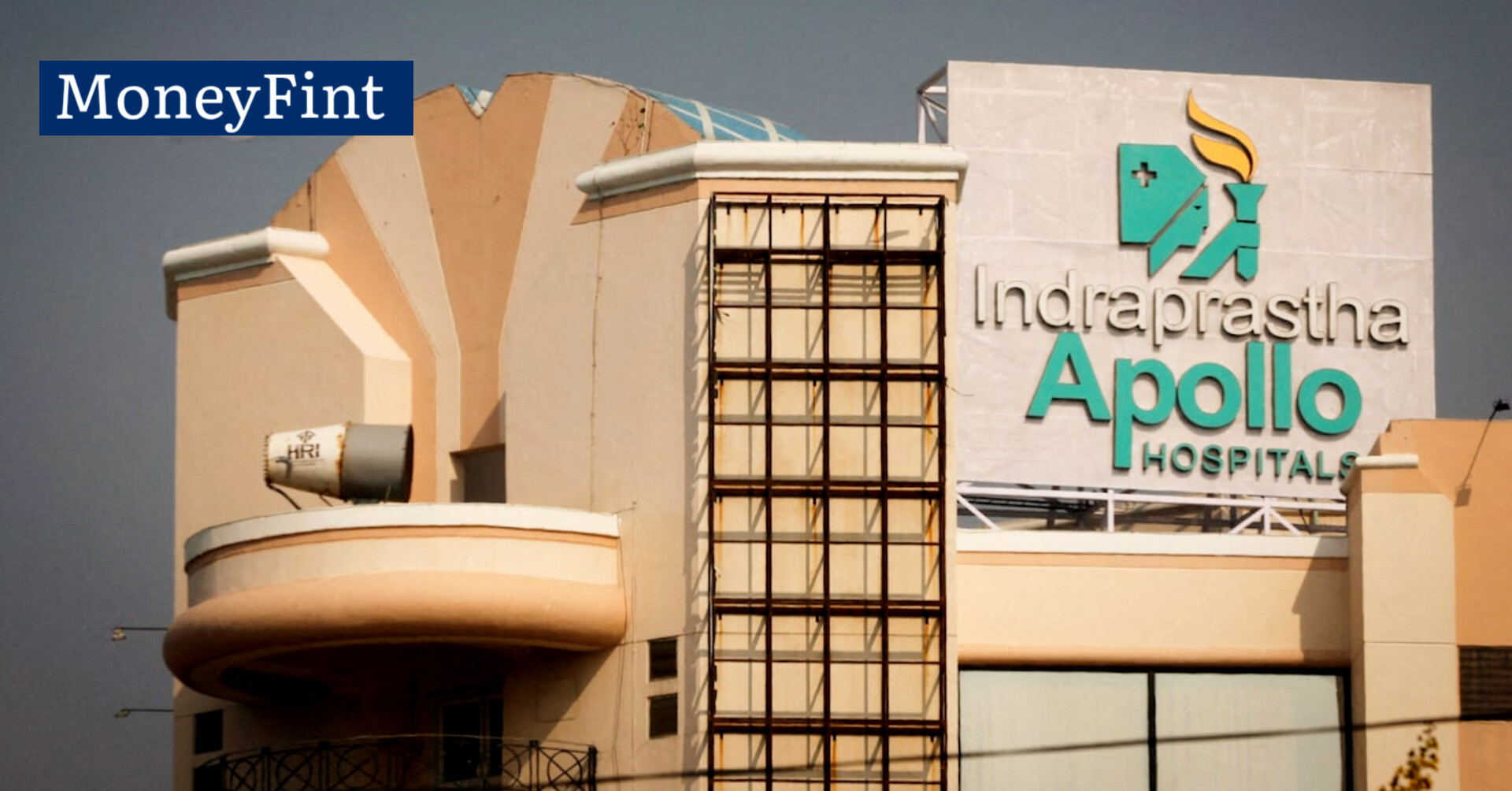
Promoter’s stake sale via block deal sparks debate but Apollo Hospitals’ growth story stays healthy; shares steady as focus shifts to debt reduction and sector tailwinds.
Lede: Apollo Hospitals Enterprise Ltd’s managing director and promoter Suneeta Reddy is set to sell up to 1.25% of her stake in the healthcare major – a parcel worth roughly ₹1,395 crore – through a block deal on the stock exchangesbusiness-standard.com. Early Friday trading saw nearly 1.9 million shares change hands at a floor price of around ₹7,850 (a modest ~1% discount to the last close)reuters.comlivemint.com. The stock opened about 0.4% lower and dipped almost 1% intraday to ₹7,848 before stabilisinglivemint.com. By midday, Apollo Hospitals’ share price was trading flat, signaling muted market reaction to the promoter’s movereuters.com. Investors appeared reassured by the company’s clarification that proceeds will go towards paring promoter group debt – not an exit signal – and that no further stake dilution is planned in the “foreseeable future”business-standard.com.
Context & Background
Founded in 1983 by Dr. Prathap C. Reddy as India’s first corporate hospital, Apollo Hospitals today is a flagship of the country’s healthcare sector. The Chennai-headquartered chain has grown to a network of 8,000+ beds across India with a presence in tertiary care, pharmacies, diagnostics and digital health servicesbusiness-standard.com. The company commands a market capitalisation of about ₹1.14 trillion (₹1.14 lakh crore)business-standard.com, making it one of the most valued hospital chains in India alongside Max Healthcare (₹1.22 trillion)stockanalysis.com. Apollo is part of the Nifty 50 index and is often seen as a proxy for India’s healthcare growth story.
The Reddy family are the primary promoters, collectively holding roughly 29.3% in Apollo Hospitals before the latest salereuters.com. Suneeta Reddy herself owned 3.36% as of June 30reuters.com, and her stake will drop to about 2.1% post-transactionbusiness-standard.com. Her sisters – Preetha Reddy, Shobana Kamineni, and Sangita Reddy – together hold about 4% (with individual stakes between 0.7% and 1.7%)business-standard.com. The family’s remaining holding (now ~28%) is largely through the patriarch and promoter entities. Over the years, Apollo’s promoters have diluted their stake gradually by bringing in institutional capital and through periodic fundraising. For instance, in 2021 the company undertook a ₹1,000 crore QIP (qualified institutional placement) to fund acquisitions, digital expansion (Apollo 24/7 platform), and reduce debtlivemint.comlivemint.com. Those moves, along with prior stake sales, brought the promoter holding down from majority levels a decade ago to the current ~28-30% range, aligning Apollo with modern corporate ownership patterns.
Notably, block deals are a common route for promoters to offload shares in bulk to institutional investors with minimal impact on open-market prices. By using a pre-arranged block trade, Suneeta Reddy can monetise 1.25% stake swiftly without spooking retail investors with prolonged selling on the exchange. Morgan Stanley acted as the broker for this dealbusiness-standard.com, indicating that the shares likely went to a set of long-term funds or FIIs ready to absorb the supply at a slight discount. Such block transactions, usually done at a 1–2% discount to market price, allow promoters to raise capital efficiently – often for debt reduction or new ventures – while buyers (typically institutional) get a chance to accumulate a sizable position in a blue-chip stock. In this case, the 2% discount to Thursday’s close (₹7,925)business-standard.com suggests strong appetite for Apollo’s stock, as the pricing was tight and the stock’s subsequent flat trading implies the market had largely priced in the sale.
Market & Sector Impact
For shareholders, a promoter trimming stake can be a double-edged sword. In the short term, an expanded free float (Apollo’s public float will rise to ~72% from ~70.7%) means slightly higher liquidityainvest.com. Indeed, with more than ₹1,400 crore worth of shares changing hands, Apollo’s stock saw heavy volumes but only a mild price reaction – indicating that institutional demand absorbed the supply. “Such a small divestment, especially one done via a well-telegraphed block deal, is unlikely to derail the stock’s momentum,” observed Deepak Jasani, Head of Retail Research at HDFC Securities, noting that the block was executed at just a 1% discountbusiness-standard.com. In Friday’s session, Apollo Hospitals’ stock essentially tread water, reflecting investor confidence that the sale is an isolated liquidity event rather than a red flag. The Nifty50 index was flat as well, suggesting no sector-wide contagion.
Broader market implications appear limited. If anything, the deal could improve Apollo’s weight in indices over time (a higher free float can increase weight in free-float weighted indices) and give large funds more stock to accumulate. A temporary overhang is possible if any of the block buyers flip shares, but Apollo’s strong fundamentals likely anchor its price. The hospital and healthcare sector in India remains on a structurally positive trajectory – a fact not lost on investors. Apollo’s stock has delivered about 16% returns in the past yearlivemint.com, outperforming the Nifty Healthcare index, while peers like Fortis Healthcare and Max Healthcare have also rallied strongly. Max Healthcare’s market cap has surged ~44% in one year to over ₹1.2 trillionstockanalysis.com, even eclipsing Apollo, and Fortis is valued around ₹71,500 crore (₹715 billion)economictimes.indiatimes.com. This reflects high investor appetite for hospital chains, driven by expectations of sustained earnings growth as Indians spend more on health.
From a sector outlook perspective, private hospital networks are benefiting from multiple tailwinds. There is rising demand for quality healthcare post-Covid, with people prioritising medical spending and insurance coverage. Procedures that were deferred during lockdowns have returned, boosting occupancy. Even though Covid-related revenues (testing, vaccination) have waned, core surgical and outpatient volumes are rising steadily. The government’s Ayushman Bharat insurance scheme – which aims to cover 500 million citizensen.wikipedia.org – is expanding the base of patients seeking hospital care, though profitability on those patients is lower. Medical tourism is rebounding as travel normalises; Apollo, with its JCI-accredited hospitals and renowned specialists, has traditionally attracted patients from the Middle East, Africa and South Asia for complex procedures. Overall, India’s healthcare spending (just ~3% of GDP) has room to grow, and private players are set to capture a significant share of that expansion. Apollo, being the largest and most diversified, stands to gain disproportionately from the sector’s growth trend – a key reason its stock commands a premium valuation.
Investor Perspective
Long-term investors and analysts largely view Apollo Hospitals as a solid bet on India’s healthcare boom, and the latest promoter stake sale does little to change that narrative. Institutional investors (FIIs and domestic mutual funds) hold a considerable chunk of Apollo’s 72% public float, and many have been increasing their exposure to the healthcare sector for its defensive plus growth characteristics. “Healthcare has a 10-15 year clear growth runway in India,” says Abhay Agarwal, founder of Piper Serica Advisors, pointing to greater health awareness after the pandemic and rising incomes enabling higher medical spendingeconomictimes.indiatimes.comeconomictimes.indiatimes.com. Apollo’s unique ecosystem – spanning hospitals, pharmacies, and digital health – positions it to tap multiple revenue streams from this trend. Agarwal notes that Apollo’s investments in its digital platform (Apollo 24/7) and clinic network indicate a strategy beyond just hospitals: “They’re building a comprehensive healthcare delivery model that can scale up beyond physical beds. That warrants a valuation premium, as Apollo could sustain growth for many years”economictimes.indiatimes.com.
The fact that promoter Suneeta Reddy’s sale is primarily to reduce debt of the promoter groupbusiness-standard.com is seen as a positive corporate governance move by many. It will sharply cut the promoters’ pledged shares from 13.1% of their holding to just 2%business-standard.com, significantly reducing risk of any forced selling in future. “De-leveraging of promoter pledges removes a long-standing overhang,” explains Deepak Jasani. He adds that the Reddy family retaining roughly 28% stake, and explicitly stating they have “no plan of any further stake reduction”business-standard.com, should comfort investors about their commitment. Indeed, the company’s statement emphasized the promoter group’s focus on Apollo’s growth across hospitals, pharmacies and digital venturesbusiness-standard.com.
Some short-term oriented traders were initially cautious on Friday – promoter selling can be perceived as insiders cashing out – but Apollo’s management quickly clarified the rationale (debt reduction and strategic monetisation, not loss of confidence). “If anything, using personal stock to repay debt shows prudence and aligns promoters’ interests with shareholders,” says Ravi Gopalakrishnan, CIO – Healthcare at ICICI Prudential AMC. He notes that Apollo’s expansions have involved significant capital, and maintaining reasonable leverage is important: “This stake sale shores up the promoter group’s financial position, which indirectly supports the company’s stability. We don’t read it as a negative on Apollo’s prospects.” Gopalakrishnan does advise keeping an eye on a few risk factors: “Private healthcare is a capital-intensive sector. Regulatory risks – like price caps on treatments or tighter insurance regulations – are always on the horizon. Apollo also has to execute its expansion without overextending its balance sheet.” Overall, however, he remains optimistic, citing strong post-Covid demand and Apollo’s brand: “For long-term investors, these dips are often buying opportunities in a secular growth story.”
Financial & Valuation Analysis
Apollo Hospitals’ recent financial performance underscores why investors remain bullish. In Q1 FY2025-26 (April–June 2025), the company posted a 42% jump in net profit to ₹433 crorebusiness-standard.com. Profit surged on the back of robust operational growth – revenue grew 15% year-on-year to ₹5,842 crore in the quarterbusiness-standard.com, as patient volumes and services across its hospitals and pharmacies increased. The EBITDA for Q1 was ₹852 crore, up from ₹675 crore a year agobusiness-standard.com, implying healthy margin expansion. Management attributed the performance to strength in healthcare services, retail health, diagnostics, and the digital & pharma distribution segmentsbusiness-standard.com – essentially all arms of Apollo’s integrated model firing in unison. Even occupancy rates, at 65%, remain decent despite adding new capacitybusiness-standard.com. The chain plans to add 4,300 beds in the next five years (over 50% expansion) with a capex of ₹7,600 crorebusiness-standard.com, which could further boost top-line growth if executed well.
Such numbers have cemented Apollo’s status as the bellwether of Indian hospital stocks. It currently trades at a price-to-earnings (P/E) ratio around 70-75, which is rich but not unusual for the sectorainvest.com. For context, rival Fortis Healthcare trades at ~82 times earningseconomictimes.indiatimes.com and Max Healthcare over 100 times. Investors are willing to pay a premium for Apollo due to its market leadership and diversified revenue streams. The company’s inclusion in key indices and ESG funds also drives consistent institutional demand. Notably, foreign portfolio investors (FPIs) have steadily increased stakes in Apollo, drawn by its defensiveness (people need healthcare in good times and bad) and growth (the private healthcare market in India is growing double-digits annually). Domestic mutual funds, too, consider Apollo a core holding in healthcare/thematic funds. “Despite its high valuation, Apollo’s earnings growth justifies it – the stock isn’t cheap, but quality rarely is,” quips Abhay Agarwal, who counts Apollo among his fund’s top holdings.
Another angle is Apollo’s pharmacy and digital health verticals, which some analysts value separately. Apollo’s 4,800+ pharmacy outlets and online platform contribute a significant chunk of revenue, and could unlock value if spun off or listed in the future. This optionality supports the high valuation multiples. The promoter stake sale does not alter these fundamentals. If anything, with no overhang of further promoter selling, analysts expect the focus to return to Apollo’s performance. Brokerage consensus remains bullish with an average 12-month target price of around ₹8,500-8,600, implying an upside from current levelsainvest.comainvest.com. The company’s balance sheet is on a healthier footing after previous fundraises and as Covid-era debts are paid down. Net debt-to-equity is manageable, and interest coverage healthy, meaning Apollo can comfortably fund its expansion plans.
Forward View & Policy Angle
Looking ahead, Apollo Hospitals’ trajectory will be influenced by both its own strategic moves and the broader policy environment for healthcare in India. The government has signaled increased emphasis on healthcare infrastructure – the National Health Policy and programs like Ayushman Bharat (PM-JAY) are steps toward expanding coverage. Ayushman Bharat, launched in 2018, is the world’s largest government-funded health insurance scheme, covering 50 crore Indiansen.wikipedia.org. For Apollo, such schemes are double-edged: they vastly expand the pool of insured patients (especially in Tier-2 and Tier-3 cities where Apollo is expanding), but reimbursement rates are low, requiring cost efficiencies. Industry bodies have lobbied for higher tariff packages under PM-JAY to ensure viability for big private hospitals. Insurance penetration in India is still under 4% of GDP, indicating plenty of room for growth – as it rises, more middle-class patients will afford treatments at private hospitals like Apollo. The government’s push to boost insurance (e.g., via mandatory health insurance proposals or incentives) could therefore directly benefit Apollo’s business in coming years.
Structural reforms could further aid Apollo’s dominance. Streamlining regulations for hospital expansion (land acquisition, faster approvals for new hospitals, tax breaks for healthcare investments) would accelerate Apollo’s rollout of new facilities. The company has announced aggressive expansion plans, especially in underserved regions – executing these will require navigating local regulations and ensuring skilled manpower. In this light, Apollo has also invested in training institutes and partnerships to ensure a pipeline of doctors, nurses and technicians for its new hospitals. Another area of reform is pricing regulation: the government in recent years capped prices of stents and knee implants and has mooted capping hospital procedure costs. While aimed at patient interest, such moves can squeeze margins. Apollo will need to continue innovating on cost management – possibly via technology (telemedicine, AI in diagnostics) – to maintain profitability if pricing pressures increase.
Nevertheless, the long-term outlook for Apollo Hospitals appears robust. India’s demographics (a growing population with increasing chronic diseases and an aging segment) ensure sustained demand for advanced healthcare. Apollo’s brand is synonymous with quality tertiary care, giving it an edge in attracting patients and commanding premium pricing in metros, while also leveraging volumes in smaller cities. The question of whether Apollo can maintain double-digit growth in coming years hinges on execution: opening new hospitals on time, scaling its digital platform, and integrating services seamlessly. Given its track record – Apollo has grown from a single hospital to a network of 70+ hospitals in four decades – analysts are reasonably confident. “Barring unforeseen shocks, Apollo should be able to grow revenues and profits in the mid-teens annually for the next 5-10 years,” opines Deepak Jasani. He cites the combination of organic growth and acquisitions in Apollo’s strategy, and the relatively low base of India’s private healthcare spend, as enabling factors. Additionally, any increase in government healthcare spending (currently only ~1.5% of GDP by the government) or public-private partnerships in healthcare would further support private players.
In the policy arena, Apollo’s leadership (the Reddy family) has been vocal in working with the government on healthcare initiatives. Apollo was quick to partner in vaccinations during Covid and has shown interest in managing some public hospitals under contract. Such collaboration could become a growth avenue – for example, managing district hospitals or medical colleges under the PPP model if the government opens that door. Also, reforms like allowing higher insurance claims for telemedicine or incentivising domestic production of medical equipment (to lower input costs for hospitals) would indirectly help Apollo. As the largest private hospital chain, Apollo is often a beneficiary of any sector-wide boosts, and it has the clout to influence policy discussions in favor of sustainable industry growth.
Conclusion
This block deal by Suneeta Reddy ultimately appears to be a routine monetisation and balance sheet exercise rather than a signal of waning confidence. The Reddy family remains firmly invested in Apollo’s future with a sizable 28% stake, and the funds raised are being used to **retire debt and release pledged shares – a prudent, shareholder-friendly movebusiness-standard.com. Apollo Hospitals’ fundamentals remain strong: it is riding secular trends in healthcare demand, posting robust financial results, and executing on expansion plans. The market’s calm reaction – with Apollo’s stock holding steady around ₹7,900 – underlines the understanding that this sale is an isolated event. Promoters periodically trimming holdings for financial planning is common in corporate India, and in Apollo’s case, it comes after years of value creation that have seen the stock become a multibagger (up over 500% in the past decade)livemint.com.
For investors, the key takeaway is that Apollo’s long-term story remains intact. The combination of India’s healthcare boom and Apollo’s strategic acumen continues to make it a compelling play. Short-term fluctuations aside, the company’s focus on high-quality healthcare, digital innovation, and prudent financial management positions it well to maintain its leadership. As India’s healthcare needs expand, Apollo Hospitals is likely to remain at the forefront – with the promoter stake sale being a footnote in its journey, rather than a turning point. In sum, while the ₹1,395 crore block trade might have raised some eyebrows, the prognosis for Apollo Hospitals’ investors remains healthy.