india’s economy is poised for a steady beginning of FY2026, with ICRA projecting Q1 GDP growth at 6.7%, outpacing the Reserve Bank of India’s forecast of 6.5%. This small but meaningful upward deviation carries significance against the backdrop of a broader, longer-term aspiration to sustain 8% annual growth, a benchmark set by the government to propel India toward developed-nation status by 2047, compelling stakeholders to assess both near-term momentum and future structural needs. ReutersThe TribuneBusiness Standard
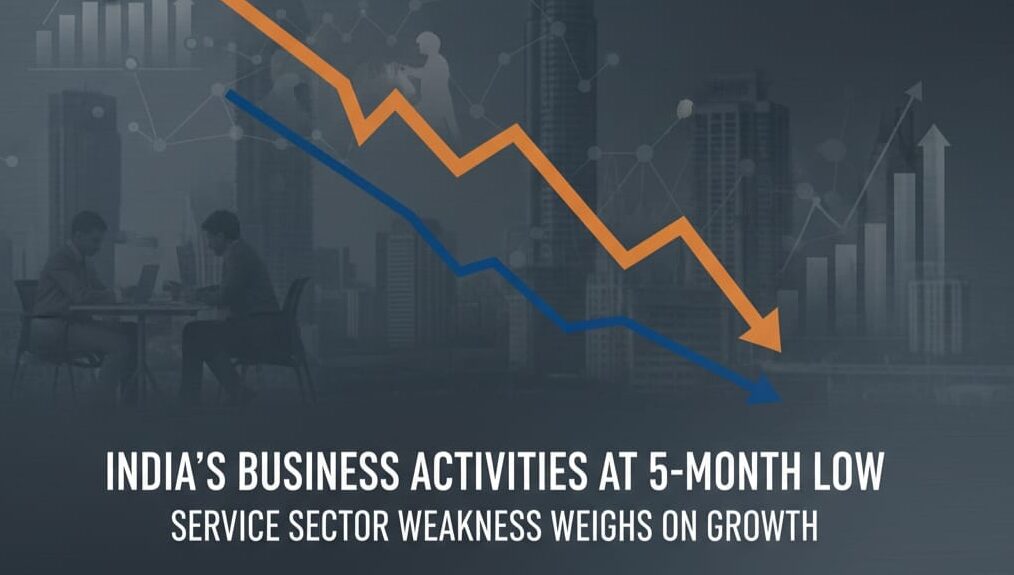
India’s recent growth trajectory reveals a slowing arc: from a robust 7.4% in Q4 FY2025 to the projected 6.7% in Q1 FY2026, and an estimated full-year expansion between 6.3% and 6.8%, marking a return to the mid‑6s range. The Economic Times+2Business Standard+2 The volume and quality of this deceleration matters, particularly because the sustainability of 8% growth still appears distant. According to the World Bank, India must achieve an average of 7.8% annual growth over the next 22 years to transition into a high-income economy by 2047—a goal that demands more than cyclical strength. The Economic Times+15World Bank+15Reuters+15
Q1 growth is being powered largely by government-led investment and resilient services demand. Central government capex rose a staggering 52% year-on-year to ₹2.8 trillion, while state-level investment also rose sharply. New project announcements nearly doubled, promoting business confidence amid ongoing global trade tensions. Export front-loading provided additional impetus, even as global headwinds—such as tariffs and geopolitical uncertainty—threaten to undermine external demand. The Tribune+1
Sectorally, services shone brightest, reaching an eight-quarter high of 8.3%, while agriculture and industry lagged at 4.5% and 4.0%, respectively. This divergence raises structural questions: can the underperforming sectors catch up, or will services remain the sole growth engine? Business Standard+4The Tribune+4Angel One+4
Policymakers remain optimistic about the 8% growth vision, framed under the Viksit Bharat 2047 mission. The Finance Ministry has told lawmakers this goal needs an investment-to-GDP ratio ramp-up—from 31% today to 35%—paired with stimulus for consumption, including personal tax cuts, and an accommodative interest rate environment. Financial Times+5Reuters+5mint+5 S&P Global Ratings also remains confident in India’s long-term outlook, pointing to ongoing reforms, infrastructure investment, and strong domestic demand as cushions against external pressures. The Times of India+1 Meanwhile, a parliamentary finance panel has recommended raising the investment rate and prioritising reforms in critical areas such as energy and agriculture to sustain the 8% growth trajectory. The Times of India
Yet several obstacles loom large. A Financial Times commentary warns that, with growth forecasts moderating to around 6.4%—the slowest in four years—economic momentum is waning. The author cautions that stagnating employment, stubborn food inflation, slack industrial investment, and global trade tensions are dragging sentiment. Realistically, India will need bold structural reforms—including liberalizing land and labour laws, enhancing female labor participation, reducing protectionism, and bolstering skilling initiatives—to avoid stagnating before it gets rich. Financial Times
From a longer-term lens, the Mumbai Consensus model emphasizes consumption-led, service-driven growth rather than export-first or investment-heavy models, suggesting India’s path is unique, but this same model could also limit diversification and resilience. Wikipedia Meanwhile, pessimists argue that without deep reforms, India risks facing demographic headwinds and an aging population—potentially “growing old before it gets rich.” The Times+1
Structural initiatives are gaining momentum. The Gati Shakti national infrastructure plan and the East Coast Economic Corridor are eye-catching projects designed to unify production networks, slash logistical costs, and strengthen manufacturing and export competitiveness. Wikipedia Additionally, the recent announcement of a task force for next-generation reforms under the Viksit Bharat banner signals government readiness to act decisively across sectors. mint+2The Economic Times+2
Global economic shifts also bear watching. While India aims for high-octane growth, the economy must withstand tightening global monetary conditions and U.S. tariffs that could shave up to 40 basis points off growth. Policymakers are responding with targeted export support for labor-intensive sectors such as textiles, apparel, and leather goods. Reuters
Economists speak with measured clarity. Some affirm that India’s large domestic consumer base, demographic tailwinds, and structural reforms provide solid underpinning for long-term growth, even if near-term rates falter. Others stress that unless private investment rallies—beyond front-loaded government spending—growth will remain vulnerable and uneven. Reuters
Looking ahead, India’s policy roadmap must marry short-term stimulus with deep structural reform. Investment must be sustained, private players incentivized, and bureaucratic frictions reduced. Key reforms could include land acquisition liberalization, labor flexibility, streamlined regulation, rural-to-urban labor mobility enhancement, and boosting financial inclusion. Export diversification into high-value manufacturing and continued leverage of global infrastructure corridors will reinforce resilience. Skilling, education, and inclusive workforce participation—especially for women—must remain central.
In sum, while Q1’s 6.7% GDP projection exceeding the RBI’s 6.5% forecast offers early encouragement for FY2026, sustaining this momentum over decades to hit the 8% growth goal by 2047 requires far more than single-quarter relief. India’s path is poised between cautious optimism and the imperative for sweeping structural change. The foundation is being set, but execution remains everything. Only disciplined reform, political will, and private capital alignment can transform aspiration into reality.