India is poised to witness a transformative phase in its economic and infrastructure landscape as Prime Minister Narendra Modi announces ₹60,000 crore worth of development projects covering infrastructure, energy, transport, housing, industry, and digital connectivity. This ambitious package is designed to spur job creation, enhance investment, and accelerate national GDP growth, with projects distributed across multiple states to ensure balanced regional development. The announcement is seen as a major step toward realizing the vision of a Viksit Bharat (Developed India) by 2047, aligning closely with the Atmanirbhar Bharat and Make in India initiatives.
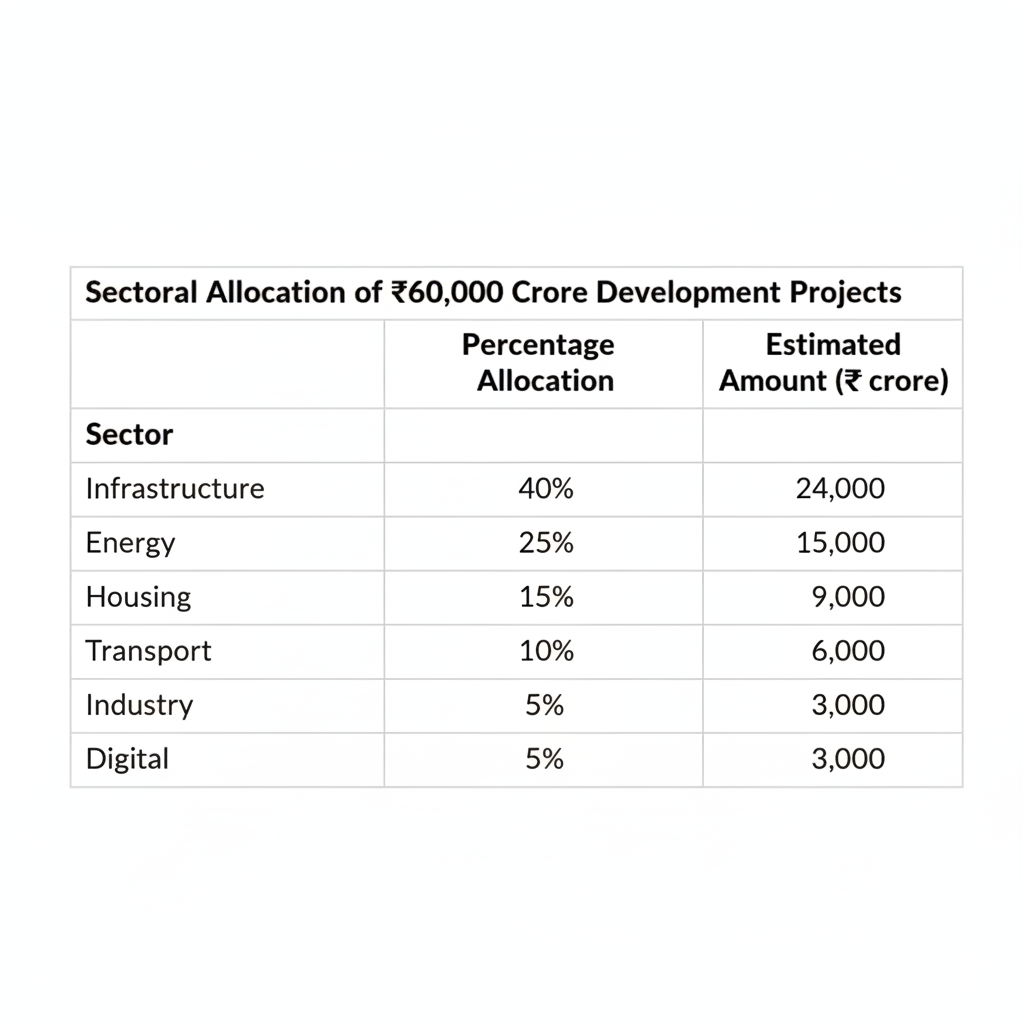
At the heart of the announcement are large-scale infrastructure projects—roads, railways, urban metro systems, and rural connectivity—that together command the largest share (40%) of the total allocation. The energy sector, a critical driver of industrial growth, will see substantial investments in renewable energy plants and modernization of existing grids, accounting for a quarter of the outlay. Housing, a key social priority, will absorb 15% of the funds, reflecting the government’s commitment to affordable shelter for all. The transport (including aviation and maritime), industry, and digital sectors will each receive around 5–10% of the total, enabling improvements in logistics, manufacturing capabilities, and digital access.
Economically, the projects promise to generate substantial direct and indirect employment, particularly in construction and allied sectors. Industries in proximity to new infrastructure will benefit from improved connectivity, access to energy, and digital tools, which should lower costs and spur productivity. The investments are expected to create a multiplier effect, stimulating demand across construction materials, logistics, energy, and smart city solutions, thereby supporting a broad-based economic upswing.
The corporate sector stands to gain materially from this development push. Leading Public Sector Undertakings (PSUs) involved in engineering, power, and transport are positioned to secure large government contracts, while private companies specializing in construction, materials, and digital solutions are also likely to see increased business volumes. This could translate into higher revenues, improved margins, and better stock performance for listed players in these segments. Infrastructure and PSU stocks, in particular, have already seen heightened investor interest following the announcement, with market participants closely tracking project execution and funding milestones.
Supportive government policy frameworks underpin these projects, emphasizing domestic manufacturing, sustainability, and digital empowerment. The Atmanirbhar Bharat initiative aims to reduce import dependence by expanding local production across infrastructure, energy, and digital sectors, while the Viksit Bharat vision focuses on long-term, inclusive development. The move is also expected to foster innovation and entrepreneurship, especially in the green energy and digital domains.
From a market perspective, analysts recommend focusing on those firms directly involved in construction, materials, logistics, power, and digital infrastructure, as these are likely to benefit first and most from the rollout. The financial health of PSUs and the allocation of funds—whether through budgetary support, public-private partnerships, or external borrowings—will be key to project delivery. Any execution delays or funding shortfalls could potentially temper market enthusiasm, but for now, the sentiment remains buoyant.
For the average Indian, these projects promise tangible improvements in quality of life—smoother commutes, better access to affordable housing, reliable electricity, and seamless digital connectivity. Job creation, especially in rural and semi-urban regions, will boost household incomes and purchasing power. Over time, these investments are likely to reduce logistical costs, improve market access, and support broader social development.
However, the government will need to carefully manage the inflationary impact of a surge in raw material and labor demand, as well as ensure that the benefits of growth reach all regions and sections of society. Effective governance, transparent procurement, and robust execution will be essential to maximizing the long-term economic and social returns from this ambitious program.
Quick Investor Checklist
- Track execution timelines and milestones as announced by the government.
- Monitor funding mechanisms and approvals from financial institutions and multilateral agencies.
- Focus on the performance of infrastructure, construction, and PSU stocks as project benefits flow through.
Retail Watch
These projects are not just about big numbers or political announcements—they will have a direct, positive impact on the lives of ordinary Indians. Better roads, faster trains, affordable homes, reliable electricity, and widespread internet access are set to improve living standards across the country. New job opportunities, especially in smaller towns and rural areas, will raise incomes and household security. While there may be some short-term price pressures due to increased demand for materials and labor, the long-term benefits of improved infrastructure and economic growth should far outweigh the costs.